The Future-Focused Investment Strategy: Balancing Vision and Volatility
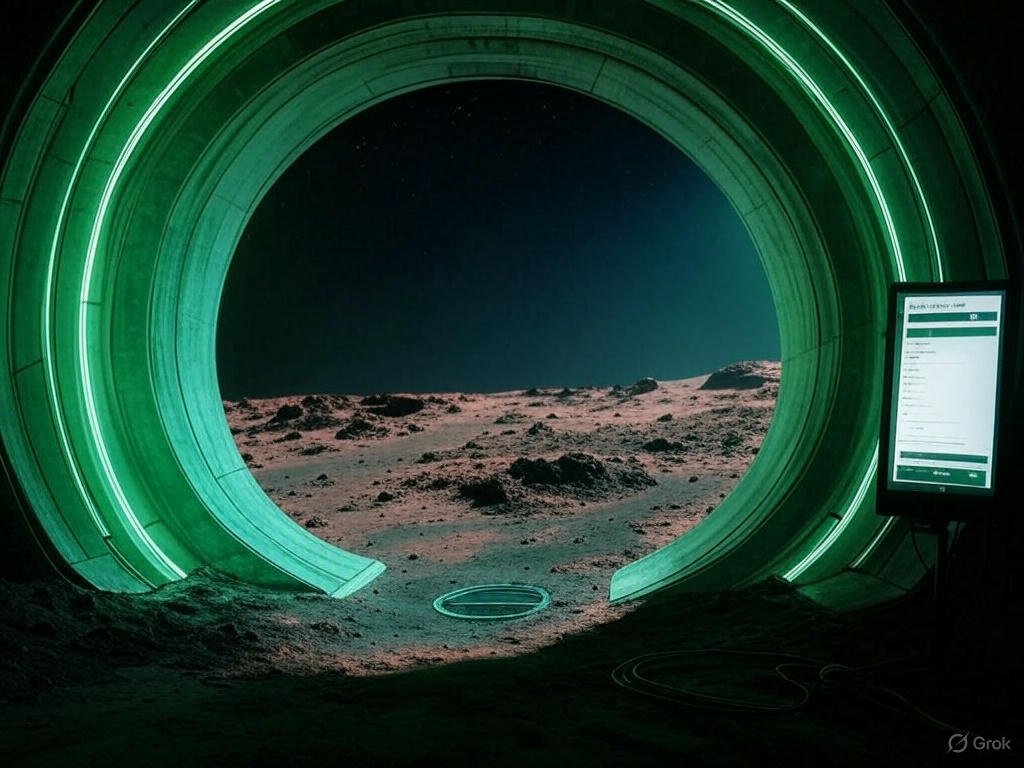
The Future-Focused Investment Strategy: Balancing Vision and Volatility
In an era where technology is rewriting the rules of human existence, investors face a unique opportunity—and challenge—to align their capital with the forces shaping tomorrow. The rapid ascent of artificial intelligence, the push for sustainable energy, and the exploration of new frontiers both on and beneath the Earth demand a strategy that’s as dynamic as it is visionary. Here’s a blueprint for investing in the future: a balanced approach that harnesses long-term growth while capitalizing on short-term market movements.
The Foundation: Commodities as the Bedrock
At the heart of any forward-looking portfolio are the raw materials powering technological leaps. Consider the metals and minerals driving today’s innovations. Uranium, for instance, is seeing renewed interest as nuclear energy gains traction—31 countries pledged to triple nuclear capacity by 2050 at COP29 in 2024, spurred by the insatiable power demands of AI data centers. Prices have hovered around $80–$90 per pound in early 2025, with analysts eyeing $100 by 2027 as supply tightens. Rare earth elements, like neodymium, are another linchpin—essential for the magnets in robotics and advanced electronics, yet constrained by geopolitical bottlenecks (China controls over 60% of supply). Copper, dubbed the “metal of electrification,” wires everything from cloud infrastructure to next-gen devices, with demand projected to outpace supply as prices climb from $4.20 per pound toward $5 by 2027.
The wisdom here is dual-purpose: hold these commodities long-term for their structural growth—20–40% gains over years—as demand for AI, clean energy, and resilience surges, while trading them short-term to capture 5–50% swings driven by news cycles, policy shifts, or supply shocks. This blend ensures you’re both building wealth and staying nimble.
Scaling the Present: Public Companies at the Forefront
Public markets offer a window into companies already scaling the technologies of tomorrow. Firms leading in AI hardware—like those producing cutting-edge GPUs—power the computational backbone of machine learning, with stock growth often mirroring the sector’s explosive rise (some have seen 150% gains in a year). Space exploration leaders, launching rockets and eyeing planetary bases, tap into humanity’s next frontier, while construction innovators digging tunnels or building resilient infrastructure bridge today’s needs with future survival. The strategy? Invest long-term in these trailblazers—expecting 20–50% returns as they mature—while actively trading their stocks for 5–50% gains on earnings beats, product launches, or market hype. It’s about backing proven winners while riding their volatility.
Seeding Innovation: The Startup Bet
Startups are the wildcards—small, agile teams tackling AI breakthroughs, brain-computer interfaces, or subsurface solutions. These ventures, often pre-revenue, carry high risk but promise outsized rewards—5x to 50x returns if they succeed by 2030. The key is diversification: spread capital across a portfolio of early-stage companies, from those enhancing AI algorithms to others pioneering fusion energy or underground habitats. The long-term play here is patience—most won’t hit for years, but a single winner can redefine your returns. There’s no short-term trading in this illiquid space, but the vision justifies the wait.
Unlocking Tomorrow: Funding Research
Research is the quiet engine of progress—think AI optimization, next-gen energy like fusion, or longevity science. Funding university labs, think tanks, or private R&D yields indirect returns—20–50% over decades through equity stakes or intellectual property. This is pure long-term vision: you’re not trading volatility but planting seeds for exponential leaps. It’s a small slice of the strategy, but one that ties your capital to humanity’s intellectual frontier.
Resilience Below: The Subsurface Edge
An overlooked opportunity lies beneath our feet and beyond our planet. Subterranean technologies—bunkers, tunnels, mining—offer resilience against surface chaos (climate, conflict), yet global spending lags far behind surface infrastructure ($1T+ annually) and space ($25B+). Underground space—think Mars or lunar bases—extends this logic, preparing humanity for multi-planetary life. Investing here means backing companies building bunkers (think $10M–$50M per unit for municipal safety) or tunneling pioneers, targeting 20–50% long-term gains as governments and private players wake up to the need. Short-term, trade related commodities or stocks for 5–30% swings as projects gain traction. It’s a niche with less competition and massive upside.
The Balance: 50/50 Vision and Volatility
The magic lies in splitting your approach: half your capital in long-term holds—commodities, public companies, startups, research, and subsurface plays—aiming for steady 20–50% growth or moonshot 5x–50x returns by decade’s end. The other half rides volatility—trading commodities, stocks, and bespoke products for 5–50% gains on market waves. This duality hedges against uncertainty: the long game builds wealth as technology unfolds, while short-term trades generate cash flow to reinvest.
Customization is Key
No two investors are alike—some crave stability, others chase moonshots. Use data-driven tools to tailor this strategy: input your risk tolerance (1–5), capital size, and focus (AI, resilience, space), then let algorithms craft a mix—say, 70% long-term commodities for a conservative player, or 60% startup bets for a risk-taker. The future isn’t one-size-fits-all; your portfolio shouldn’t be either.
Why It Works
This strategy thrives on convergence—AI needs energy (uranium), chips (rare earths), and wiring (copper); resilience demands subsurface solutions; space and startups push boundaries. By blending stability with agility, you’re not just betting on the future—you’re helping build it. The wisdom? Look where others don’t, balance patience with action, and align your money with the arc of human progress.